




Zelenskyy Challenges Putin Over Fake Ceasefire as Russian Attacks Persist in Ukraine, 2025
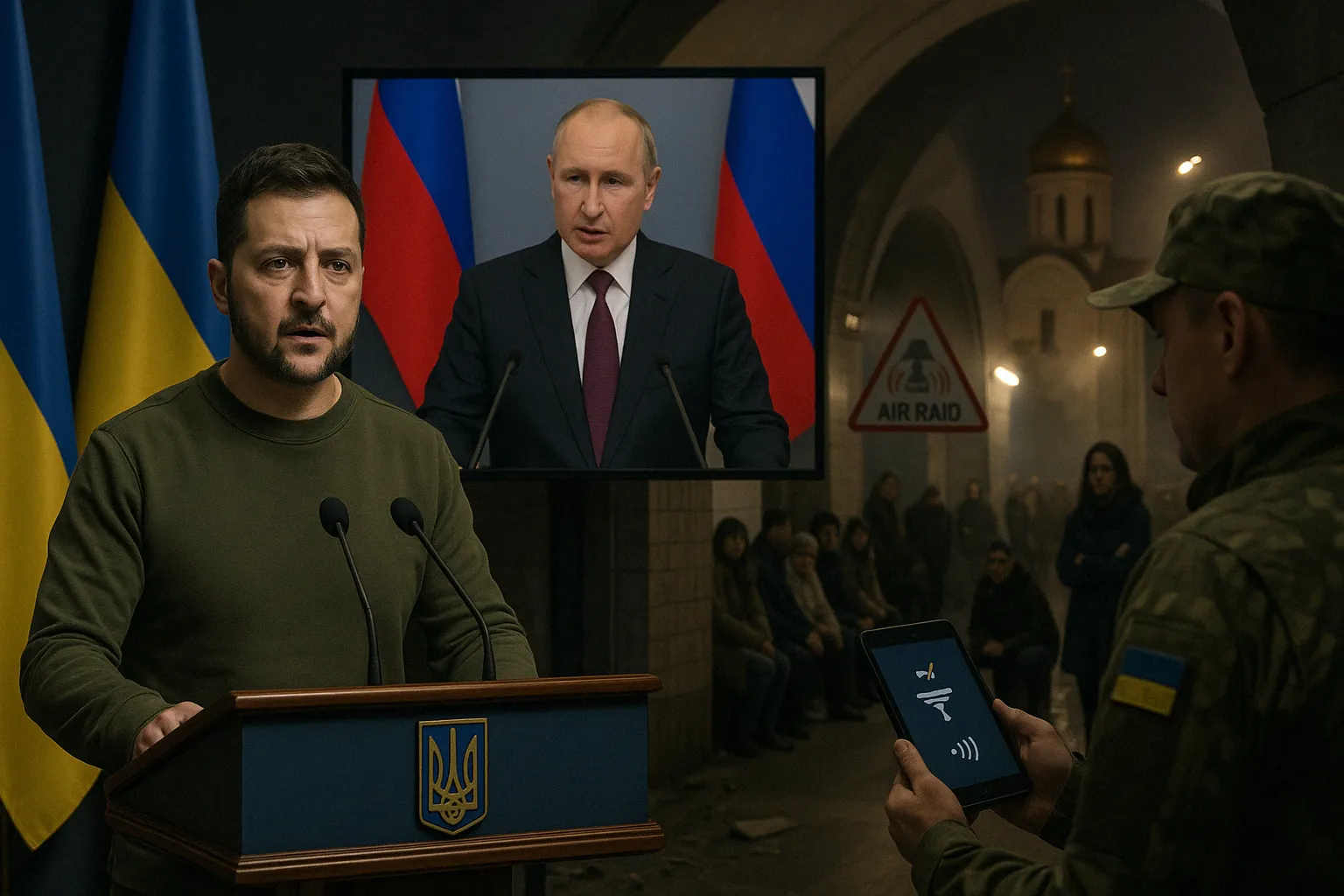
Ukraine war updates: Zelenskyy rebukes Putin’s Easter ceasefire claim as fighting intensifies, accusing Russia of deception while air raid sirens ring across Ukraine.
Putin’s “Ceasefire” Claims: More Shadow Than Substance
There’s something strange about the whole thing, isn’t there? On one hand, President Putin stands in Moscow, talking up a ceasefire for Easter Sunday—a gesture, he says, made for peace. On the other hand, Ukraine’s sirens keep wailing and cities keep shaking. Volodymyr Zelenskyy, Ukraine’s president, isn’t buying it. Honestly, who would?
As the Orthodox Easter approached in April 2025, Russian media touted a 36-hour halt in attacks. But across Ukraine, especially in battered eastern regions, the reality was starkly different. Shelling didn’t pause. Reports of missile strikes and drone attacks lit up the night, leaving many Ukrainians wondering if “ceasefire” had become just another word for business as usual. You can imagine the collective frustration—a sense of déjà vu that’s all too familiar by now.
Zelenskyy Responds: The Power of Calling a Bluff
Zelenskyy speech from Kyiv was about as fiery as they come. He flat out challenged Putin’s claims, stating that Russia’s so-called pause was nothing more than a play for the cameras. In his address, Zelenskyy went so far as to call it a “fake truce.” And really, would anyone expect anything less from a leader who’s faced down tanks, missiles, and propaganda in equal measure?
He made it clear: “The only silence we want is the silence that comes with genuine peace. Not with empty words and flying rockets.” Across social media and national television, his words resonated. Even Ukrainian soldiers on the front were quoted saying, “We hear no peace, only noise.” With each word, Zelenskyy wasn’t just talking—he was rallying, urging the world to look past political theater and focus on daily realities.
Russian Attacks Continue: Ceasefire in Name Only
If you tried to draw a map of every spot hit in Ukraine during the so-called ceasefire, you’d quickly run out of pins. Ukrainian officials recorded over thirty drone and missile attacks in the span of 48 hours—some landing in Kharkiv, others in Odesa and beyond. For civilians, Easter bread was broken in bomb shelters rather than at family tables.
Numbers like these tell their own story, but sometimes it’s the small details that hit hardest. In Lviv, church windows rattled just as morning services began. In Dnipro, children colored eggs by flashlight. To say spirits are unbreakable may sound like a cliché, but it’s true—there’s a quiet kind of courage humming under the chaos. You’ve probably noticed how often Ukrainians talk about hope. It’s almost stubborn, the way it refuses to leave.
Propaganda and Perception: What Counts as “Peace”?
Here’s the thing: war isn’t just fought with bullets or drones. There’s a media battle, too, and nobody plays it bigger than the Kremlin. Russian state channels flooded airwaves with footage of quiet streets in occupied towns, droning on about newfound calm. Yet, independent observers, from the OSCE to foreign correspondents, painted a much more harrowing scene.
This tug-of-war over truth isn’t new. During the past year, both sides have leaned into digital platforms—Telegram, Facebook, even TikTok—to win minds as fiercely as they threaten territory. Have you ever noticed how the language shifts? “Operation,” “special mission,” “protective strike”—each side’s vocabulary is almost as loaded as their hardware. For many outside Ukraine, these word games can make it tough to tell what’s really happening on the ground.
Realities on the Ground: Civilians Stuck in the Middle
Civilian life in wartime Ukraine, especially around Kharkiv, Bakhmut, and frontline towns, has become a patchwork of routines stitched together with anxiety. When missile alerts begin, families huddle in corridors. Schools double as shelters. Supermarkets are open when they can be, but shelves are often empty of more than just bread.
Here’s a tiny snapshot: Olena, a schoolteacher in Mykolaiv, described how her class decorated Easter eggs with borrowed crayons between air raid warnings. “We don’t stop living,” she shrugged. “We pause, then we laugh.” It’s moments like these—bittersweet, determined, even oddly cheerful—that seem to define Ukrainian resilience best. You see it in every local news photo: children on scooters, grandmothers with prayer beads, neighbors sharing what little chocolate’s to be found. It’s defiance, but gentle, like a promise whispered against the noise.
International Response: The World Watches, and Sometimes Acts
It’s no secret that countries across Europe and North America are watching intently, and not always quietly. While some leaders echo Zelenskyy’s outrage, calling Russia’s truce “meaningless posturing,” others pull out the diplomatic playbook—calls for dialogue, stern warnings, carefully worded statements. The United Nations held a late-night emergency session, but, as is often the case, consensus was complicated. Old alliances, new resentment—it’s a puzzle that rarely comes together neatly.
Military aid, humanitarian supplies, and financial support keep moving in Ukraine’s direction, though never at the pace locals hope for. There’s talk everywhere—in Berlin coffee shops, Paris train stations, even London’s bustling Tube—about the ethics, economics, and endless costs of the war. Yet despite the distance, support for Ukraine’s sovereignty remains surprisingly sticky, maybe because Zelenskyy’s blunt honesty and the clear persistence of the Ukrainian people make fence-sitting uncomfortable for anyone watching.
Fake Ceasefire, Real Consequences: What’s Next?
So, what are we to make of Putin’s Easter truce? For many in Ukraine, it’s seen as a cynical gesture—a brief pause only in propaganda, not in violence. Zelenskyy’s callout isn’t just about one day or one event; it’s about demanding that words and actions finally match up.
Looking forward, the road to peace still has more bends and bumps than most can count. Negotiations remain stalled; trust is as rare as a silent night. Yet, every time a ceasefire gets broken, every time a speech gets made, people are listening. The world’s lens might flicker from Ukraine now and then, caught up in other tragedies or trending threats, but the echo of this so-called truce will linger.
Stay Informed: Resources to Follow the Story
- For regular updates, monitor reputable sources like The Guardian Ukraine section or international agencies such as Reuters and the BBC.
- Looking for a local perspective? Ukrainian outlets like Ukrinform and the Kyiv Independent publish in English and Ukrainian.
- Humanitarian groups such as the Red Cross and UNHCR post regular updates about needs inside Ukraine for those wanting to help.
Curious about deeper analysis? Podcasts like Ukrainecast or newsletters from Meduza give a sense of the war’s daily rhythm, far beyond official statements.
Final Take: Why Truth Still Matters in War
At the core, Zelenskyy’s challenge to Putin isn’t just directed at the Kremlin—it’s a call for honesty, for clear-eyed reporting, and for a little less spin on all sides. Whether you’re in Kyiv or Kansas, it’s easy to get lost in the fog. But truth, even if it only peeks out for a breath or two, still matters.
So next time you hear talk of a ceasefire, take a moment. Ask whose voice is missing and what’s happening outside the camera’s frame. Because, honestly? Words are powerful. But in Ukraine, actions still make the loudest noise.
For continuing, in-depth coverage, check out our live Ukraine-Russia updates to stay up to date.
Hello my friend! I want to say that this post is amazing, nice written and include almost all important infos. I would like to peer more posts like this .
**mitolyn official**
Mitolyn is a carefully developed, plant-based formula created to help support metabolic efficiency and encourage healthy, lasting weight management.
Your article helped me a lot, is there any more related content? Thanks! https://accounts.binance.info/register-person?ref=IXBIAFVY
Bạn có thể đặt cược tự động theo chiến lược tại ưu đãi 188v – tiết kiệm thời gian và duy trì kỷ luật cá cược. TONY02-03
You completed a number of nice points there. I did a search on the issue and found most persons will agree with your blog.
Your article helped me a lot, is there any more related content? Thanks! https://accounts.binance.com/ph/register?ref=IU36GZC4