



Zelensky Slams Putin’s Ukraine Ceasefire Proposal as Dangerous Move to Manipulate Human Lives in 2024
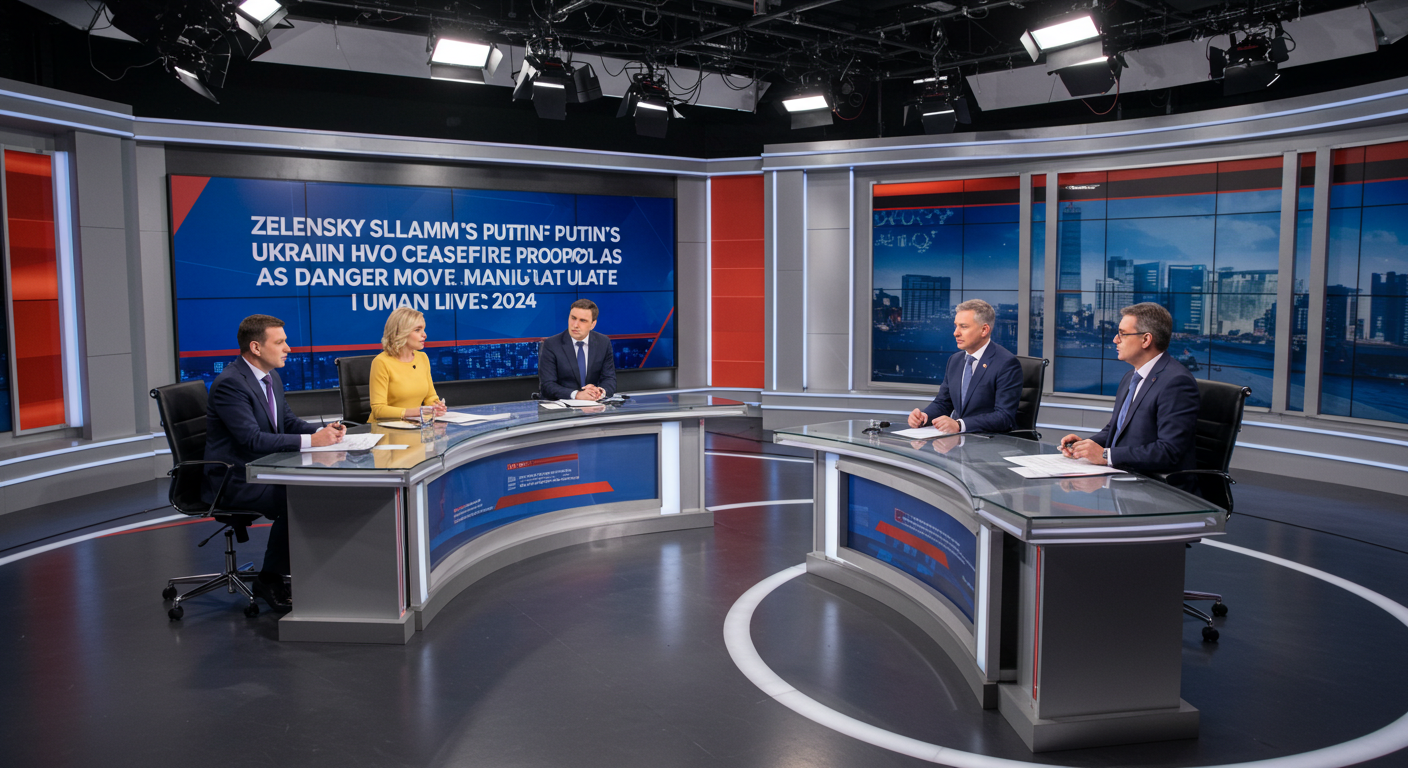
When the news first dropped about Russian President Vladimir Putin’s latest ceasefire proposal for Ukraine, you could almost sense the world pausing for a split second. Was this a real chance for peaceful breathing room, or just another page in a long, fraught playbook? In a year already bursting at the seams with tension and uncertainty, the idea of a ceasefire sounds, on the surface, like the light at the end of the tunnel. But as Ukrainian President Volodymyr Zelensky made crystal clear, things are far, far more complicated.
The Ceasefire Proposal: A Political Poker Game
Let’s get right to the heart of the matter: Putin’s call for a Ukraine ceasefire landed like a surprise card on the table, sending ripples through political halls around the globe. On paper, a truce hints at compassion—at least, that’s what official soundbites would have you believe. But Zelensky’s response? He wasn’t mincing words. In fact, he called Putin’s bid not just “dangerous,” but a blatant “attempt to play with human lives.”
Just think about it. It’s a little like offering an umbrella to someone as they’re standing under a waterfall—you know something’s off, even if you can’t put your finger on every detail. For Zelensky and many Ukrainians, trust isn’t easily earned—not when so much is on the line and past agreements have crumbled like stale bread.
Zelensky’s Take: Manipulation Over Meaningful Peace
You know what? Zelensky didn’t tiptoe around the issue. His words carried both fire and fatigue, almost as if he’d been here too many times before. He questioned the authenticity and timing of the proposal, suggesting that Putin was “using the promise of peace to advance his own interests.” According to him, this wasn’t about saving civilians or stopping violence—it was about optics and strategy.
Zelensky likened the proposal to a high-stakes chess move, designed not to bring real relief but to shuffle the board when it’s most favourable to Moscow. “If the goal is to manipulate hope and twist the narrative, it’s tragically effective,” he said in a televised address. Honestly, it’s hard not to see his point, given the past pattern of broken truces or shaky negotiations.
Why This Ceasefire Leaves Ukrainians Skeptical
Historical context plays a big role here. Over the last two years, temporary ceasefire deals have been proposed, only to fall apart shortly after—sometimes within hours. Remember the “Green Corridors” for civilians? Some became traps instead of safe passageways. No wonder trust is thin on the ground.
- Past peace talks have often unravelled at the last minute, leaving families stranded and international partners frustrated.
- Promises from Moscow have, more often than not, clashed with reality on the ground—particularly for residents of cities like Kharkiv, Mariupol, and Donetsk.
- The casualties, both physical and emotional, have been staggering. Each failed ceasefire chips away at the hope buried deep inside ordinary Ukrainians.
Pause for a second and imagine daily life for families caught in these “truce” zones—do you pack up the car and leave behind everything while a fragile deal holds? Or do you risk staying, fingers crossed that peace doesn’t slip away again?
Political Timing: A 2024 Pressure Cooker
Let’s not dodge the obvious. 2024 is shaping up to be a pivotal year. With global elections, shifting alliances, and heightened uncertainty everywhere from Washington to Brussels, Putin’s timing feels less accidental and more calculated. It’s almost as if every move on this geopolitical chessboard is measured not just in lives but in media cycles and public opinion polls.
World leaders, from EU officials to the White House, responded to the ceasefire talk with cautious scepticism. Their statements read more like warnings than congratulations. Zelensky took it a step further, urging international partners not to be lulled into false security. He knows—and so do most Ukrainians—that “pauses” without true commitment often lead right back to violence.
Behind the Scenes: The Human Cost of “Playing” With Lives
Here’s the thing: broad headlines rarely show the grit and pain beneath. The politics of war tend to overshadow the faces of those living with its consequences. Zelensky, perhaps keenly aware of this, stressed that every proposal, every delay, or broken truce lands squarely on regular people’s shoulders. Homes lost, reunions missed, futures put on hold—it’s a lot to carry.
Statistics might say “civilian casualties” or “infrastructure damage,” but for families in Odesa or the suburbs of Kyiv, these aren’t just numbers. Every day brings new stories—kids shuffling to makeshift classrooms, grandmothers baking bread for neighbours in crumbling neighbourhoods, resilient in ways you don’t read about often.
Still, Zelensky’s tone is tinged with hope—but only if the so-called truce becomes more than showmanship. Real security, he argues, can only be earned by honest negotiation and genuine steps toward peace.
Losing Trust, Gaining Resolve
It’s a strange twist—each disappointing deal, each broken promise, seems to harden Ukrainian resolve. Rather than folding under pressure, people on the ground adapt and, somehow, keep going. They listen to politicians, sure, but their faith rests mostly in each other. Local networks, small villages pulling together, frontline medics patching wounds—these are the unsung heroes Zelensky nodded to with his pointed words.
The Larger Context: What’s Next for Ukraine and the World?
So, where do we go from here? Even with fatigue and heartbreak woven into every announcement, Zelensky’s message managed to strike a balance between warning and hope. He called out Putin’s tactics, yes, but also left the door open for real, verifiable peace. He asked the world to stay aware, to support Ukraine not only with weapons and words—though those matter—but with patience and vigilance while the process grinds on.
And that, perhaps, is the trickiest part. International support ebbs and flows. Attention shifts. But as Zelensky sees it, this isn’t the time to turn away or assume the worst is over. He urges partners, both near and far, to demand more than symbolic gestures and to remember: with every pause or ceasefire offer, real lives and real futures are at stake.
Quick Recap: What’s at Stake in This “Ceasefire”?
- Civilians want security, not suspense. Uncertainty wears everyone down.
- Leaders on both sides weigh every announcement for hidden motives.
- International observers are wary of repeating mistakes from earlier, quickly broken truces.
Zelensky, for all his exhaustion, remains adamant—no half-measures. No empty promises. Only action that puts people’s safety at the centre. It’s a bold position, but given the record, can you really blame him?
Staying Informed and Engaged
If you’re following the Ukraine crisis, don’t settle for headlines alone. Look deeper, seek multiple perspectives, and keep tabs on international responses—because, honestly, the story changes as often as the weather. This ceasefire debate, with all its twists and sharp edges, might just be the latest chapter. But for millions, it’s a chapter they can’t close.
For more updates and in-depth discussions, you can always check out the latest at NDTV’s world news page.
And so, as 2024 barrels forward, Zelensky’s impassioned warning lingers. When peace is dangled like a carrot, sometimes the best question to ask is: what’s really being offered—and at what cost?
yferay
52v62n
Thank you for your sharing. I am worried that I lack creative ideas. It is your article that makes me full of hope. Thank you. But, I have a question, can you help me? https://accounts.binance.com/vi/register?ref=MFN0EVO1
**mitolyn**
Mitolyn is a carefully developed, plant-based formula created to help support metabolic efficiency and encourage healthy, lasting weight management.
Real informative and great body structure of content material, now that’s user pleasant (:.
But a smiling visitor here to share the love (:, btw great layout. “Reading well is one of the great pleasures that solitude can afford you.” by Harold Bloom.
Nice post. I was checking continuously this blog and I’m impressed! Extremely useful information specially the last part 🙂 I care for such information a lot. I was seeking this particular information for a long time. Thank you and best of luck.
Your article helped me a lot, is there any more related content? Thanks!
I don’t think the title of your article matches the content lol. Just kidding, mainly because I had some doubts after reading the article. https://www.binance.com/register?ref=IXBIAFVY
Can you be more specific about the content of your article? After reading it, I still have some doubts. Hope you can help me. https://accounts.binance.com/vi/register-person?ref=MFN0EVO1
You made some decent points there. I regarded on the web for the problem and found most individuals will go along with along with your website.
References:
Aquarius casino laughlin
References:
https://hack.allmende.io/s/vgXGnKHE1
References:
Underground steroids for sale
References:
https://metagap.ro/employer/buy-online-british-dispensary/
References:
Silver star casino
References:
https://prosmart.by/user/bushslave3/
References:
Casino west virginia
References:
https://www.tikosatis.com/index.php?page=user&action=pub_profile&id=635492
References:
Best stack to gain muscle and lose fat
References:
http://www.zahnaerzte-gomaringen.de/Blog/index.php/;focus=STRATP_com_cm4all_wdn_Flatpress_9326203&path=&frame=STRATP_com_cm4all_wdn_Flatpress_9326203?x=entry:entry170428-164928%3Bcomments:1
References:
Dakota dunes casino
References:
https://schoolido.lu/user/caketruck30/
References:
Buying steroids online legal
References:
https://www.sg-friedersdorf.de/index.php/;focus=STRATP_com_cm4all_wdn_Flatpress_11400423&path=?x=entry:entry241007-143940%3Bcomments:1