




U.S. Health Officials Push for Stunning Phase-Out of Artificial Food Dyes
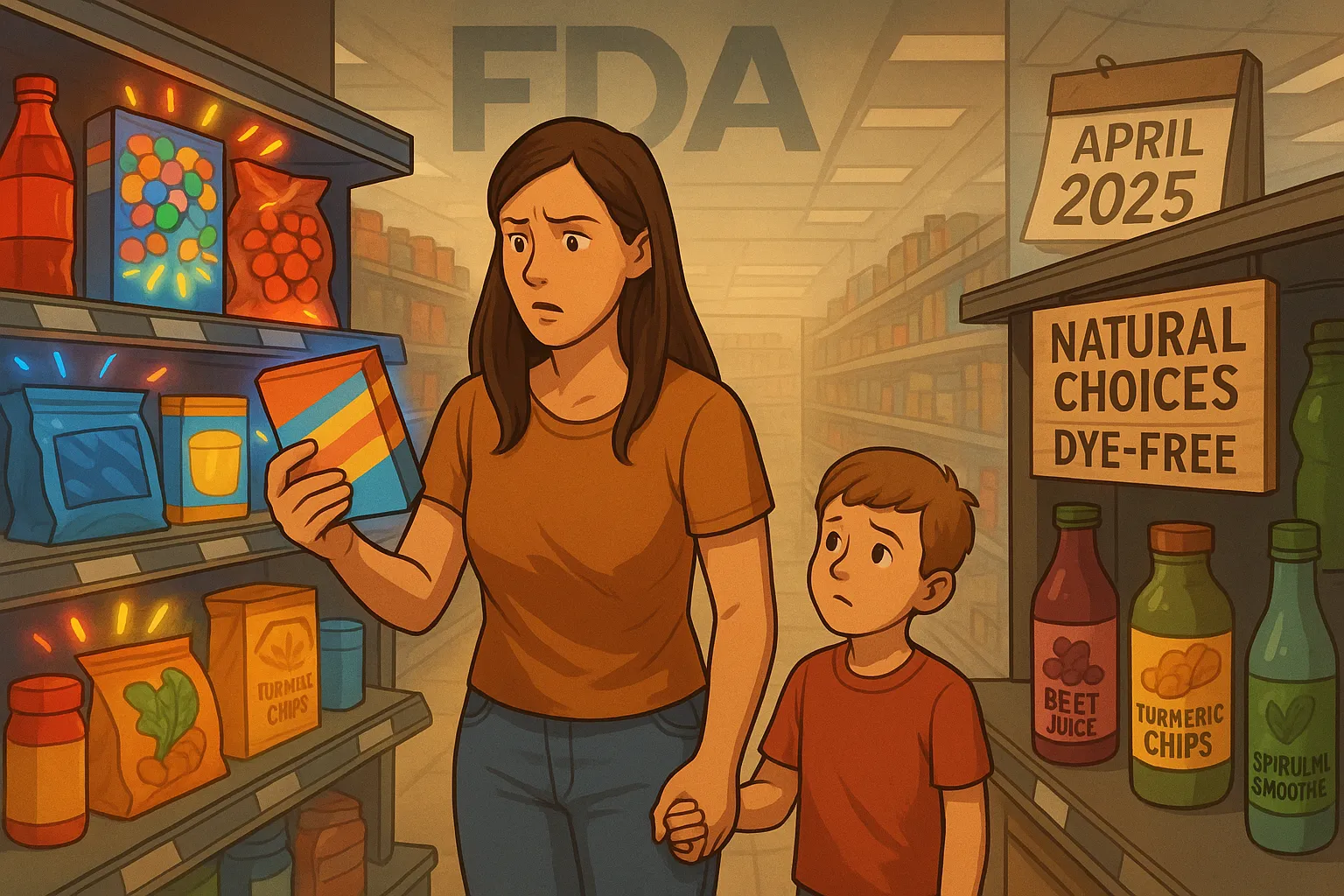
The U.S. urges the food industry to phase out artificial dyes by 2025, citing growing health concerns and shifting consumer preferences for safer, natural ingredients.
What’s Up with Artificial Food Dyes? The Health Angle
Artificial food dyes are everywhere. Crack open a can of soda, rip open a bag of bright candies, or spoon out your favourite neon yoghurt—the odds are, those colours probably didn’t come from beets or blueberries. But here’s the thing: U.S. health officials, including the Food and Drug Administration (FDA) and Centres for Disease Control (CDC), are now urging food makers to phase out these synthetic dyes, fast-tracking the process to wrap up by April 2025.
Why such urgency? It all boils down to rising concerns about health—especially for kids. Studies over the years have found possible links between some food dyes and hyperactivity, allergic reactions, and even long-term behavioural effects. And let’s be honest, nobody signs up for their lunchtime fruit snacks to come with a side of controversy.
So, what triggered this latest wave of action? In short, new science and a whole lot of parents making noise. Research increasingly points to certain dyes—think Red 40, Yellow 5, and Blue 1—as potential culprits for behavioural problems in sensitive children. At the same time, food companies have seen shoppers turn their backs on ingredients lists that read more like chemistry homework than grocery staples.
Red 40, Yellow 5, and More: What’s Actually in Our Food?
If you’ve ever checked the label on a popular cereal or gummy treat, you’ve probably spotted a few numbers with those flashy colours. Here’s a quick rundown:
- Red 40: Found in sodas, snack cakes, gelatin desserts, and more. Known to cause allergies in some and studied for links to behaviour problems.
- Yellow 5 (Tartrazine): Often tucked in candies, chips, and baked goods. Some people report hives or asthma after eating products with this dye.
- Blue 1: Less common, but not rare. Used for frostings, candies, and ice creams. Occasionally, it’s linked with mild allergic reactions.
Most of these dyes are petroleum-based, a detail that always seems to take people aback. You don’t expect a slice of birthday cake to come from the same stuff they use for car fuel, right? Yet, for decades, these additives have kept food looking inviting and shelf-stable.
Health and Children: Behavioral Links Under the Microscope
Let me explain: the debate isn’t just academic. For years, parents across the U.S. have wondered if their kids’ mood swings or restlessness are sometimes more than just “kids being kids.” Could that glowing blue sports drink be to blame?
Studies, particularly from Europe, have explored how artificial colours might affect children prone to attention-deficit/hyperactivity disorder (ADHD). The results? Hard to ignore. While not every child reacts, enough do that the European Union now requires warning labels on products with certain dyes.
Here in America, it took time for these findings to breach the mainstream, but pressure has been mounting. Some school districts already ban snacks containing certain dyes. Paediatricians have grown increasingly vocal about removing synthetic colours from the food supply, at least for the products most popular with kids.
Industry Moves: Natural Colors and Cleaner Labels
You know what’s funny? Even as U.S. regulators played catch-up, many big-name brands were quietly scrambling behind the scenes. Grocery store shelves have slowly transformed. Remember when ketchup was always bright red? Now “natural” and “no artificial colours” tags pop up on EVERY aisle—from cereals to dairy to shelf-stable snacks.
The food industry, facing tweets, TikToks, and parent groups calling for safer options, started swapping out artificial dyes for natural ones. These might come from beets, carrots, paprika, spirulina, and even turmeric. Sure, sometimes the colour isn’t as bold, but for a lot of folks, that’s a trade they’re willing to make.
Yet, making those changes isn’t simple. Manufacturers have to deal with natural pigments that fade faster, react strangely to light, or don’t give quite the same “wow” factor. Still—honestly—the demand is so strong now, companies are pushing through. After all, who wants to be the last holdout with synthetic additives front and centre?
Regulation and Pushback: Shifting Tides in U.S. Food Safety
The FDA’s latest action isn’t coming out of nowhere. They’ve been watching trends in Europe and California, where some of the world’s toughest food-labelling laws have forced brands to reformulate earlier or pay up. In California, for instance, a ban on several additives (including some dyes) has prompted companies to sell separate versions of snack foods depending on what coast you’re on.
Not everyone’s thrilled about the shift, though. Some food scientists argue the evidence of harm isn’t “clear-cut” for most people and warn that natural colours can be pricier—potentially pushing up grocery bills. Others point to the risk that natural dyes can still cause reactions in kids with food allergies. But honestly, for most parents, that concern seems easier to stomach than synthetic chemicals from the oil industry.
What Happens Next: Timeline for the Big Dye Clean-Out
So, what’s on the horizon? U.S. officials have given an ambitious deadline: by April 2025, food companies should stop using artificial dyes across the board. If it feels sudden, that’s the point—consumers’ patience has run thin, and regulators want quick action.
Will this dramatically change how our groceries look? Maybe. Store aisles might get a little less fluorescent, but the hope is that lunchboxes will be a touch safer and parents can breathe easier when reading labels. Major snack makers, beverage brands, and even fast-food chains are already fast-tracking reformulations to stay ahead of the game.
And if you’re wondering whether your classic red velvet cake will lose its glow, don’t panic—natural food science has come a LONG way. It may look a tad different, but the taste? As they say, that’s a piece of cake.
Why Now? The Cultural Shift Toward Transparency
Let’s call it what it is: transparency is trending. Millennials and Gen Z customers scroll through ingredient lists on apps before tossing that snack into the cart. Clean eating is more than a fad; it’s an expectation. Organic markets, allergy-friendly cafes, and farm-to-table eateries have made reading labels a badge of honour, like finding a surprise dollar in your jeans.
Even fast-food giants are racing to advertise artificial-free fries, shakes, and kids’ meals. Gone are the days when bright blue slushies were an unquestioned childhood joy; now people want to know, “Where’d that blue come from?”
How Can You Spot Artificial Food Dyes in Your Snacks?
Honestly, it can feel a bit like detective work. If you want to check for artificial colours, scan ingredient lists for:
- Red 40
- Yellow 5
- Yellow 6
- Blue 1
- Blue 2
- Green 3
- Allura Red, Tartrazine, and other chemical-sounding names
Pro tip: Products advertised as “no artificial colours” often highlight natural alternatives like spirulina or beet juice instead.
And if you’re ever in doubt, check out lists from advocacy groups or kick off a quick Google search. Grocery apps and barcode scanners can pull up reports and warnings with a single tap—technology, right?
Wrapping Up: The Future of Food Color and Consumer Confidence
This isn’t just about removing bright colours—it’s about rebuilding trust in the foods we feed our families. As these changes roll out by 2025, the U.S. joins a global movement to put safer, simpler ingredients on the table. Whether you’re a parent, a teacher, a little league coach, or just someone who likes to keep an eye on what’s in the pantry, there’s never been a better time to demand transparency from food makers.
So next year, as those bold colours quietly fade, take a second look at your plate. A little less flash, maybe—a lot more peace of mind.
Want to stay updated on food safety shifts and healthy eating trends? Check out the original story at FOX 9 News.
Thank you for your sharing. I am worried that I lack creative ideas. It is your article that makes me full of hope. Thank you. But, I have a question, can you help me?
Die zwischen PayPal und dem für die Verarbeitung Verantwortlichen ausgetauschten personenbezogenen Daten werden von PayPal unter Umständen an Wirtschaftsauskunfteien übermittelt.
Der für die Verarbeitung Verantwortliche wird PayPal personenbezogene Daten insbesondere dann
übermitteln, wenn ein berechtigtes Interesse für die Übermittlung gegeben ist.
Zur Abwicklung des Kaufvertrages notwendig sind auch solche personenbezogenen Daten, die
im Zusammenhang mit der jeweiligen Bestellung stehen. Bei den an PayPal übermittelten personenbezogenen Daten handelt es sich in der
Regel um Vorname, Nachname, Adresse, Email-Adresse, IP-Adresse, Telefonnummer, Mobiltelefonnummer
oder andere Daten, die zur Zahlungsabwicklung notwendig sind.
Mit der Auswahl dieser Zahlungsoption willigt die betroffene Person in die zur Zahlungsabwicklung
erforderliche Übermittlung personenbezogener Daten ein. PayPal übernimmt ferner Treuhänderfunktionen und bietet Käuferschutzdienste an. Die von YouTube veröffentlichten Datenschutzbestimmungen, die unter /intl/de/policies/privacy abrufbar sind, geben Aufschluss über die Erhebung, Verarbeitung und Nutzung personenbezogener Daten durch YouTube und Google.
Die Registrierung der betroffenen Person unter freiwilliger Angabe personenbezogener Daten dient dem für die Verarbeitung Verantwortlichen dazu, der betroffenen Person Inhalte oder Leistungen anzubieten, die aufgrund der Natur
der Sache nur registrierten Benutzern angeboten werden können. Der für die Verarbeitung Verantwortliche kann die Weitergabe an einen oder mehrere Auftragsverarbeiter, beispielsweise einen Paketdienstleister, veranlassen, der die
personenbezogenen Daten ebenfalls ausschließlich für eine interne Verwendung, die dem
für die Verarbeitung Verantwortlichen zuzurechnen ist,
nutzt. Aus diesem Grund steht es jeder betroffenen Person frei, personenbezogene Daten auch auf alternativen Wegen, beispielsweise
telefonisch, an uns zu übermitteln. Die Verarbeitung personenbezogener
Daten, beispielsweise des Namens, der Anschrift, E-Mail-Adresse oder
Telefonnummer einer betroffenen Person, erfolgt stets im Einklang mit der Datenschutz-Grundverordnung und in Übereinstimmung mit
den für die Baden-Württembergische Spielbanken GmbH & Co.
Es werden auch Führungen angeboten, die interessierten Anfängern die Spiele näherbringen sowie
interessante und unterhaltsame Geschichten rund um das Glücksspiel zu bieten haben. Diese modernen Geräte bieten zusätzliche Spielfunktionen, Gewinnlinien und Freispiele.
References:
https://online-spielhallen.de/verde-casino-25e-bonus-ohne-einzahlung-2025/
Thanks for sharing. I read many of your blog posts, cool, your blog is very good.
I am extremely inspired with your writing skills and also with the layout in your blog. Is that this a paid subject or did you modify it yourself? Anyway keep up the nice quality writing, it’s uncommon to look a nice blog like this one nowadays..
Your point of view caught my eye and was very interesting. Thanks. I have a question for you. https://www.binance.com/register?ref=IHJUI7TF
Thank you for your sharing. I am worried that I lack creative ideas. It is your article that makes me full of hope. Thank you. But, I have a question, can you help me? https://www.binance.com/register?ref=IHJUI7TF