



Putin Orders Unilateral Easter Ceasefire in Ukraine, Halts All Military Activities to Mark Religious Holiday
In a move that’s raising eyebrows and, let’s be honest, some cautious hopes, Russian President Vladimir Putin has ordered a unilateral Easter ceasefire in Ukraine. This rare pause aims to halt all military activities so folks—soldiers and civilians alike—can mark the religious holiday. But is this a sincere olive branch or just another twist in a war-weary saga?
Putin’s Ceasefire in Ukraine: What Was Actually Announced?
So, here’s the meat of the story. On Thursday, Putin publicly announced a stop to “all military activities” across Ukraine, timed to begin just ahead of Orthodox Easter. That means—for the first time in months of relentless fighting—guns would go silent, at least for a while.
The Russian Ministry of Defence, following up on Putin’s statement, directed troops “at all lines of contact” to cease operations from midnight Saturday through Sunday evening. They’re calling it a humanitarian gesture. Now, whether that means peace or just a temporary pause? That’s the million-ruble question.
You can almost picture the world’s diplomats pushing glasses up their noses, scrutinising the details. Why now? What really changes with this pause?
Orthodox Easter Truce: A Symbolic Gesture or Something More?
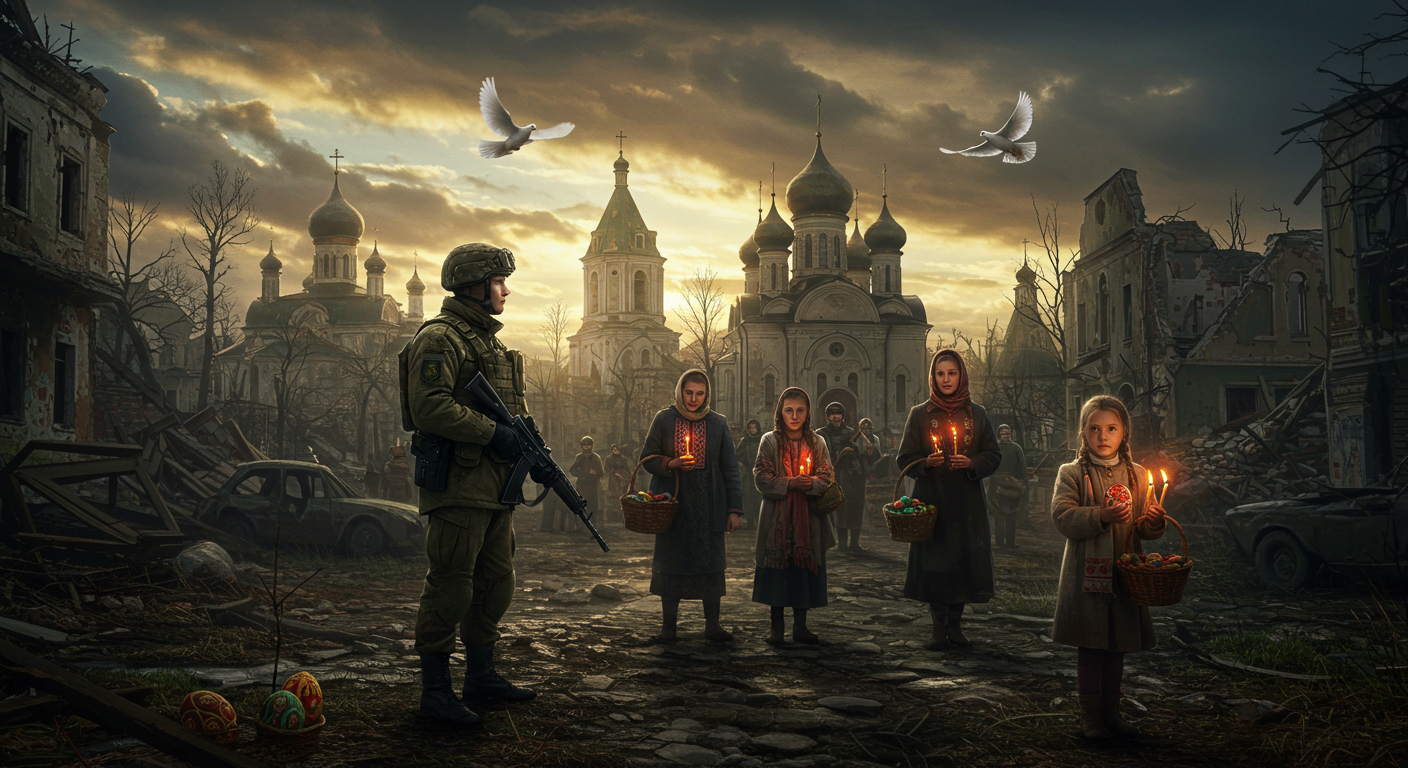
For anyone who hasn’t made friends with a Russian or Ukrainian neighbour, Orthodox Easter holds big-time spiritual and cultural weight. Painted eggs, tall domed cathedrals, and prayers whispered in candlelit rooms—there’s a deep tradition that goes beyond politics and battle lines.
Putin’s order name-dropped this tradition, framing the ceasefire as respect for “sacred values of the people of Russia and Ukraine.” Sounds meaningful, right? On paper, it’s the sort of moment where hope floats—a dad hugging his son, grandmas lighting candles safely, even if just for a day.
But, just like a traffic jam after a snowstorm, truce announcements don’t always mean instant calm. Ceasefires—especially unilateral ones—are sticky. One side promises restraint, but the other might not trust enough to join in. History, after all, has a pretty spotty track record with things like this turning out clean.
Ukraine’s Reaction: Sceptical, Surprised, or Both?
Ukraine’s leadership, for their part, didn’t cheer or whoop. Some called it a “publicity stunt”—skeptical that the Russian army would truly pause or that the move was meant to paint Moscow as the benevolent side. And, in all fairness, you kind of get their point. It wouldn’t be the first time a ceasefire ended before it really began.
Nevertheless, Ukrainian families—they’re caught in the crossfire—are hoping for even a few quiet hours. There’s that wishful “maybe this time” hope. Simple joys, like gathering around a table with Easter bread and coloured eggs without listening for sirens—those are felt most deeply in moments like this.
History Repeats: How Do Ceasefires in Ukraine Usually Go?
Now, this isn’t the first time a holiday has inspired hope for brake-slamming the fighting. There have been ceasefires called during Christmas, Victory Day, and even the odd parliamentary election. Sometimes, you get a handful of days with reduced shelling; other times, not so much. The humanitarian corridors open for civilians—brief, fragile windows before the fighting starts up again.
Let me explain: Unilateral means only one side (here, Russia) is promising to stop. Unless both sides put ink to paper and agree, well, there’s lots of room for mistrust—and for violations, accidental or otherwise. Some analysts have compared it to agreeing to put down snowballs in a snowball fight, only to keep one behind your back—just in case.
Global Reactions: Leaders Watch—and Wait
If you scan the morning papers or scroll international headlines (maybe over your first cup of coffee), you’ll see the world is talking about this ceasefire. Western leaders are cautious; that’s putting it mildly. The U.S. and European Union officials say words are nice, but proof is in the pudding—or, well, in the sustained quiet on the ground.
- German Chancellor Olaf Scholz called it a “welcome gesture” yet stressed, “Lasting peace needs more than a day’s truce.”
- Across the Atlantic, White House spokespeople echoed a similar tone: “We’ll believe it when we see it.”
- Pope Francis, ever the peacemaker, urged all sides to honour the Easter spirit, praying aloud for “a true path to ending suffering.”
It’s basically a global “wait and see.” Nobody wants to be too cynical, but history hasn’t handed out gold stars for previous ceasefire promises.
Why This Move, Why Now? Timing and Tactics
You know what? The timing here is almost as interesting as the ceasefire itself. Some experts think Putin’s move could be a public relations gambit—projecting an image of pious restraint to both Russian citizens and a camera-happy world. Others suspect it’s a strategic pause, allowing battered forces to regroup before the next round.
But maybe—just maybe—it’s a fleeting moment where someone decided, “Pause.” Even in a months-long conflict, the ache for normalcy can nudge leaders in unexpected directions. For soldiers on both sides, a moment to breathe, pray, call home—those things matter, even if they’re fleeting.
The Human Side: Hope, Fear, and Waiting
Here’s the thing: For most Ukrainians and Russians, holidays don’t just mark time—they’re lifelines of memory, tradition, and resilience. Parents may use egg dye instead of bulletproof vests, at least for a day. Children might ask, “Will the bombs be quiet while we hunt for eggs?” It’s the sort of question that lands heavy in the gut.
Many aid workers are crossing their fingers, preparing for a possible surge of displaced people looking to reunite with relatives if the guns go silent. Medical teams, clergy, and volunteers all stand by; sometimes, a single peaceful night can mean food delivered or a call made to loved ones far away.
Looking Ahead: Unilateral Ceasefire’s Place in a Complicated Conflict
Let’s not kid ourselves—the road ahead is messy. Ceasefires open a door just a crack. Will it close again fast, or can someone wedge it open, even a little? Some commentators say these temporary truces are like the pause between verses in a long, turbulent song; you listen for hope but brace for more noise.
The real story unfolds after Easter—when the world will watch whether this gesture was a one-off or a real shot at peace. Until then, each minute of quiet counts for those who’ve known only sirens and gunfire for so long.
Stay Curious: Catch Up on Latest Ukraine and Russia Updates
Want more on how world leaders and civilians are reacting? Check the detailed report at Economic Times coverage of Putin’s Easter ceasefire for full statements and evolving analysis.
Sometimes, a single day of stillness in a storm says as much as any speech. Will it last? That’s anyone’s guess—but it’s a question the world will be watching, heart in hand, through Easter and beyond.
I don’t think the title of your article matches the content lol. Just kidding, mainly because I had some doubts after reading the article.
Your article helped me a lot, is there any more related content? Thanks!