




How Rapid Testing Unlocks Hope and Drives Monumental Global Health Change
Revolutionary rapid testing brings hope for global health by speeding up disease detection, improving outcomes, and transforming how communities tackle outbreaks.
Rapid Testing: A Speedy Turn in Global Health
If you’d told someone a decade ago that a finger-prick test on a dusty road could save thousands of lives in one afternoon, they might’ve looked at you sideways. Yet here we are, living in a time when a quick test can flip an entire healthcare story. Rapid testing—quick-result checks for diseases or infections—has become something of a hero in global health, often working quietly behind the scenes but with loud results.
Doesn’t it just blow your mind how we’ve moved from week-long waits for results to getting an answer before you finish your morning tea? It’s a game changer for doctors, families, and entire communities. Especially in places where health systems are stretched thin.
The Magic of Early Disease Detection
Let’s face it: disease rarely waits for anyone. The sooner you know what you’re up against, the stronger your position. Rapid testing makes that possible, showing results for illnesses like malaria, HIV, tuberculosis, and COVID-19—sometimes in mere minutes.
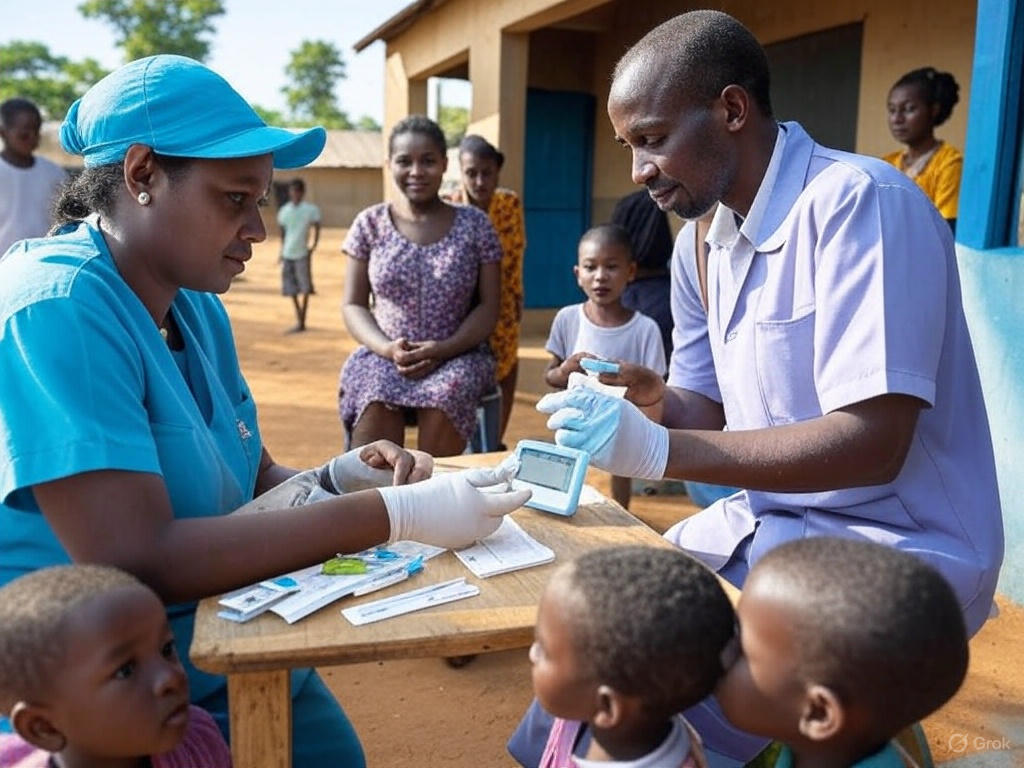
Why is early detection such a big deal? Well, catching a disease early means quicker treatment. And quicker treatment almost always means better outcomes, plain and simple. For example, imagine a community health worker visiting a remote village with a backpack full of rapid tests. Instead of sending samples to a lab hours away and waiting (sometimes anxiously) for results, a child with a fever can get tested on the spot. If it’s malaria, they can get medicine that same afternoon. If not, the search for the cause continues—no time wasted.
More Than Just Speed: Accuracy & Trust
Sure, speed matters, but so does trust. Communities must believe that a test works. Modern rapid tests are now highly accurate, thanks to years of research and feedback. These days, you’ll hear stories from healthcare workers who say, “Once folks saw the tests did what they promised, word spread.” Trust can be contagious, too.
Pandemics, Outbreaks, and the Need for Fast Decisions
During the COVID-19 pandemic, the whole world got a crash course in why fast testing matters. Remember waiting in long lines at testing sites? Those pangs of suspense before seeing a result? At scale, this anxiety affects not only individuals but entire cities or countries.
When tests can deliver answers fast, health officials are able to spot problems early, like a rogue spark in a dry field—before it spreads. This quick-response approach isn’t just for pandemics, though. Outbreaks of diseases like Ebola, dengue, or even measles can be reined in, sometimes stopped in their tracks, with the sharp edge of rapid testing. Just think: the sooner you know, the faster you can act.
Driving Equity: How Rapid Testing Levels the Field
Here’s where the heart of the story beats the loudest. For folks in remote or under-resourced settings, distant city clinics aren’t always an option. Sometimes, crossing a river or travelling for hours just isn’t possible—especially if you’re unwell.
Rapid tests put powerful tools right where they’re needed. Community health workers, school nurses, even pop-up clinics at markets—suddenly, a “luxury” that once belonged only to gleaming urban hospitals is right on a cardboard table in a rural village. That’s health justice without the slogans.
Community Empowerment Through Information
One surprising side effect? When people own their health information—knowing their status without delay—they make different choices. Parents can act fast for their children. Workers can avoid spreading infections at factories or fields. Entire neighbourhoods gain confidence and a sense of control.
Technology That Travels: Innovations Making Rapid Testing Smarter
So, how did we get here? Tiny sensors, smart diagnostics, and even smartphone apps now connect results to medical records, dash off alerts to health agencies, and sometimes even help track the beginnings of a new outbreak. Think about it—your phone might help warn you about a dengue cluster before it gets serious. The tech keeps evolving, moving from simple strips to digital readers, sometimes right in the palm of your hand.
Of course, challenges remain. Cold chains (a fancy phrase for temperature-controlled storage), supply lines, and—even today—sometimes old-fashioned misinformation can slow the spread of this innovation. But the hope is clear: with every new breakthrough, those obstacles shrink a little further.
Global Partnerships: Collaboration Breeds Tangible Progress
This is the part where you realise it’s not just about tools—it’s about people and teamwork. Tight-knit partnerships between governments, non-profits, start-ups, and local leaders make all the difference. Investments in universal health coverage, training, manufacturing, and shipping logistics mean rapid tests reach the farthest corners of the globe.
The Bill & Melinda Gates Foundation, for example, has been a powerful backer of testing innovation—especially for diseases that have, historically, flown a little under the radar. There’s also a movement for shared tech, so that what works in Jakarta or Dakar can be picked up in Lima or Manila.
From Clinics to Classrooms: Where Rapid Testing Shows Up
You might picture rapid tests only in hospitals, but pull back the curtain and you’ll see them at border crossings, refugee camps, airports, and—this might surprise you—schools. The idea is that wherever people gather, diseases can, too. So, testing isn’t just a clinical process but a communal shield.
And as seasons shift—think about how the flu sweeps schools each year—rapid testing becomes a first line of defence. Teachers get answers before a cough turns into a classroom outbreak. It might sound simple, but ask any principal: quick action can keep a school open when everything’s on the line.
Challenges and The Road Ahead
Of course, it isn’t all sunshine and fast fixes. Supply shortages, cost issues, and local scepticism can throw up roadblocks. Still, those moments of hesitation don’t erase all the progress. The steady march is unmistakable: every year, tests get cheaper, faster, and easier to use.
Imagine a future where everyone—no matter their postal code—has easy access to the right tests at the right time. Where outbreaks are nipped before they spiral. Where health isn’t about luck but about the timely help that simple technology can bring. It’s ambitious, but hasn’t hope always changed the world in small, powerful ways?
Everyday Heroes: Health Workers Making a Difference
Can’t forget the people who make all this possible. The community nurse, the travelling doctor, the local volunteer. They’re often the first to spot a troubling fever or share results with a worried parent. Their stories—sometimes told in hurried whispers, sometimes shouted from rooftops—are full of quiet heroism.
They remind us: every test isn’t just a statistic; it’s a face, a name, and a moment of hope.


Your point of view caught my eye and was very interesting. Thanks. I have a question for you.
Your point of view caught my eye and was very interesting. Thanks. I have a question for you. https://accounts.binance.info/register-person?ref=IHJUI7TF
he blog was how do i say it… relevant, finally something that helped me. Thanks
Thank you for some other excellent post. The place else may just anybody get that kind of information in such an ideal method of writing? I’ve a presentation next week, and I am at the search for such info.
Can you be more specific about the content of your article? After reading it, I still have some doubts. Hope you can help me.
Can you be more specific about the content of your article? After reading it, I still have some doubts. Hope you can help me. https://accounts.binance.com/hu/register?ref=IQY5TET4
Thank you for your sharing. I am worried that I lack creative ideas. It is your article that makes me full of hope. Thank you. But, I have a question, can you help me? https://accounts.binance.com/kz/register-person?ref=K8NFKJBQ
Chỉ sau thời gian ngắn ra mắt, slot365 đã nhanh chóng khẳng định vị thế tại thị trường quốc tế với sự hiện diện tại hơn 20 quốc gia, nổi bật tại châu Á như Việt Nam, Thái Lan, Nhật Bản và đang mở rộng sang châu Âu. TONY03-17
Để mở rộng cộng đồng hội viên, slot365 link còn có chính sách khuyến mãi dành cho những người giới thiệu bạn bè. Khi bạn mời thành công một người mới tham gia và người đó thực hiện nạp tiền, bạn sẽ nhận được phần thưởng bằng tiền mặt hoặc tiền thưởng để cá cược. Điều này giúp khách hàng tham gia vừa có thể tận hưởng những trận đấu hấp dẫn, vừa có thêm cơ hội gia tăng thu nhập một cách dễ dàng. TONY03-23O