



Exercising During This 3-Hour Window Dramatically Slashes Heart Disease Risk
Exercising during the ideal 3-hour morning window can dramatically lower your chances of heart disease. Learn how timing your workouts boosts cardiovascular health.
The Sweet Spot: Morning Exercise and Heart Disease Prevention
You’ve probably heard the saying, “Timing is everything.” Well, when it comes to exercise and your heart, turns out there’s real science behind it. A groundbreaking new study reveals getting active during a very specific 3-hour morning window could slash your risk of heart disease—big time.
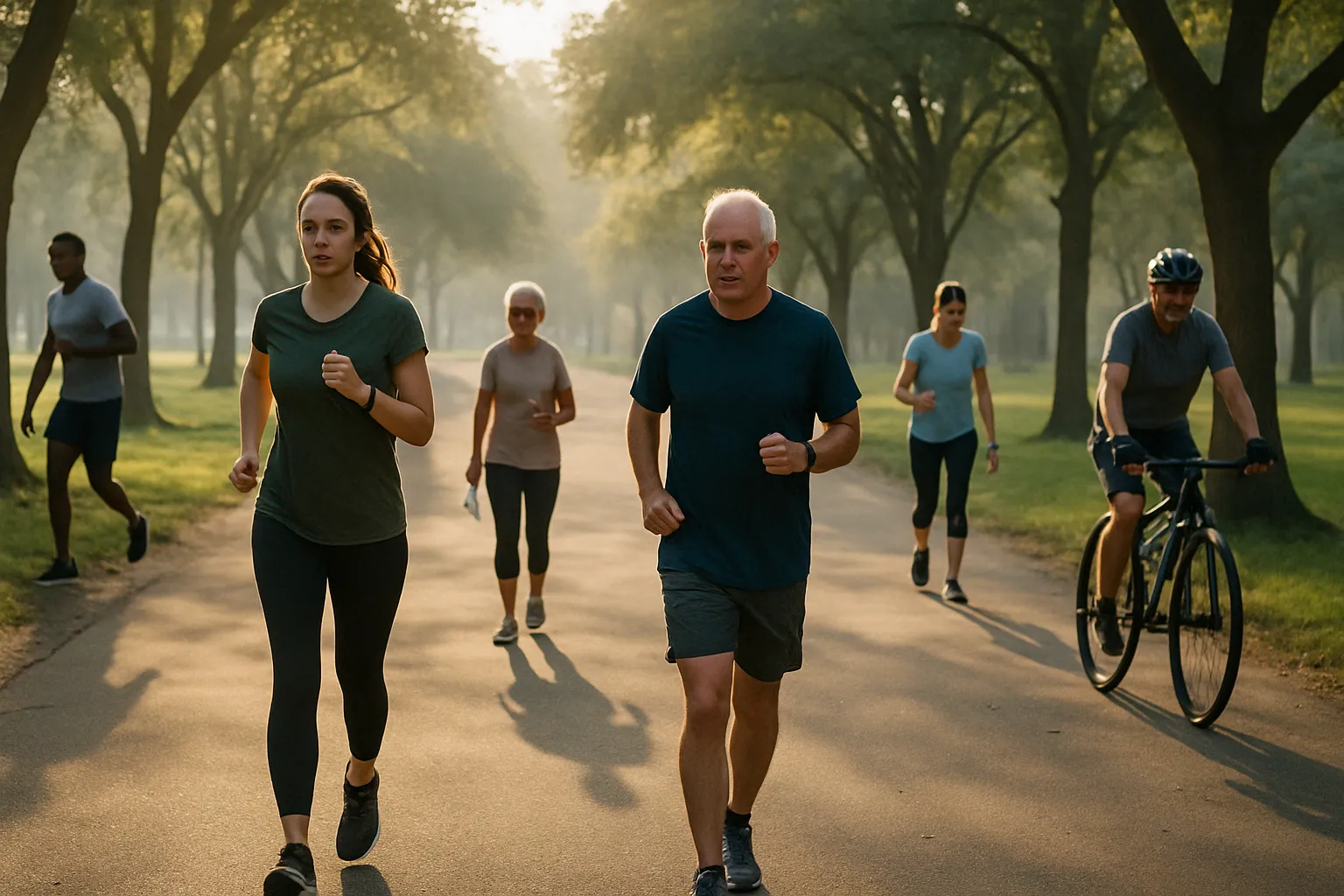
So, what’s this magic window? Researchers found that exercising between 7 a.m. and 10 a.m. can make a world of difference for your heart. We’re talking jogging, brisk walks, cycling—it all counts. But why does it matter when you get those steps in?
Timing Your Workouts: Heart Health Gets a Boost
Here’s the thing—your body’s natural rhythms, known as circadian rhythms, aren’t just fancy science talk. They actually affect how your heart, hormones, and even blood flow work throughout the day. The study’s authors—who followed nearly 90,000 participants in the UK Biobank for over five years—spotted a clear pattern: folks who exercised in the early morning had the lowest rates of heart disease.
Let me explain: Exercising as you start your day seems to help your heart pump better, lower inflammation, and keep blood pressure stable. The science is still evolving, but experts believe morning movement “primes” your cardiovascular system for the hours ahead.
Cardiovascular Benefits: Why Morning Moves Matter
Honestly, it’s not just about ticking a box on your workout log. People who fit their exercise in those early hours had up to a 25% reduction in heart disease risk compared to late-day warriors. That’s not small potatoes! What’s more, this effect held up even after accounting for age, gender, sleep habits, and other factors like smoking.
The researchers think morning workouts improve your metabolism and help manage stress hormones—like cortisol—before the usual chaos of the day kicks in. Think of it as setting the thermostat before the house gets too hot.
How Much Activity Do You Need During That Window?
Now, don’t panic—you don’t have to train like an Olympic athlete at dawn. The study’s participants simply logged at least 30 minutes of moderate activity a day, several days a week. What counts? A mix of:
- Brisk walking (maybe with your neighbor or a good podcast)
- Morning bike rides (bonus points for fresh air)
- Jogging or easy running (no need to sprint, just get moving)
- Even dance workouts—yes, living room included!
What really shocked the researchers? Even “non-routine” exercise made a difference, as long as it happened during that early window. So you don’t need a strict gym regime—being consistent is key.
Who Benefits the Most? Age, Gender, and Lifestyle
Curious if this applies to everyone? Here’s what’s fascinating—the benefit was especially strong for women and older adults. The study suggests shifting your workout earlier in the day may be particularly effective if you’re 50+, or if you’ve got risk factors like high blood pressure or diabetes.
You know what else? People with irregular sleep—night owls or shift workers—didn’t see as big a benefit, but still noticed improvements. The takeaway? Any movement is better than none, but the timing sweetens the deal.
Morning vs. Evening Workouts: Is There a Downside?
But wait, what if morning exercise sounds impossible? Let’s be real, not everyone is a chipper, pre-sunrise person. The good news: Evening or lunchtime exercise is still hugely beneficial for overall health, including lowering stress, improving mood, and helping cholesterol.
The difference is, early exercise seems to offer that extra edge for heart disease prevention. Think of it as adding a cherry on top of an already healthy sundae. If your schedule just won’t budge, don’t throw in the towel—a workout at any time is better than the couch!
Tips to Make Morning Exercise Stick
Look, old habits die hard. If you’re used to exercising later, easing into morning sweat sessions can be rough. Here are a few tricks to help you hit the ground running—literally or figuratively:
- Prep the night before: Lay out your clothes, set out shoes, and charge your headphones. Don’t leave it to the morning fog.
- Start small: Even 10-15 minutes counts at first. String together short walks with a friend, or shuffle through a basic stretch routine.
- Buddy up: Meet a neighbor or join a local group. Sometimes knowing someone’s waiting is all the motivation you need.
- Reward yourself: Maybe it’s that first cup of coffee, or your favorite breakfast. Tie your routine to something you love.
Remember, it’s okay if you sleep in some days—habits take time to build. Every early-morning step counts.
Common Questions: Sorting the Facts About Exercise Timing
This kind of research always stirs up questions—and honestly, some healthy skepticism. Here’s where things get interesting (and honestly kind of fun):
- Does this mean late workouts are bad? Not at all! They’re still great for heart and mental health, they just don’t lower heart disease risk quite as much as morning ones, according to this study.
- What if I only have weekends free? That’s fine—those morning walks or weekend pick-up games still count for a lot. Consistency matters more than perfection.
- Is it safe for everyone? For most healthy adults, yes. But if you have a heart condition, always check with your doctor before changing your routine. Start slow, and listen to your body.
And here’s an interesting aside: Some experts wonder if our ancient ancestors were actually morning movers—hunting and foraging at dawn. There’s still plenty to learn about how our biology adapts to light, sleep, and movement. The science keeps evolving, so don’t be shocked if the story keeps developing over time.
Final Thoughts: Your Heart, Your Schedule
At the end of the day—wait, scratch that—by the start of your day, you’ve got a shot at making a real impact on your long-term heart health. If fitting in those early-morning workouts feels tough at first, that’s normal. Try making small tweaks, celebrate small wins, and remember what you’re working toward: A heart that keeps you strong for everything ahead.
And if you’re already a loyal sunrise walker or jogger? High five. You’re onto something big—even if your workout sometimes feels like just an excuse for more coffee. Sometimes the simplest shifts, like changing when you move, can make the biggest difference (and surprise your doctor at your next checkup).
If you’re hungry for more health tips, from exercise hacks to foods that care for your heart, don’t miss our other articles on self-care and fitness. Here’s your nudge: grab those sneakers, set the alarm, and give your heart a head start.
For the full details of the study and everyday tips for lifelong health, check the original article right here.

Have you ever considered creating an e-book or guest authoring on other blogs? I have a blog based on the same ideas you discuss and would love to have you share some stories/information. I know my readers would value your work. If you are even remotely interested, feel free to shoot me an e mail.
obviously like your website however you need to check the spelling on quite a few of your posts. Many of them are rife with spelling issues and I in finding it very troublesome to inform the truth however I’ll definitely come back again.
Thanks for sharing. I read many of your blog posts, cool, your blog is very good. https://accounts.binance.info/kz/register?ref=K8NFKJBQ
Good post however , I was wanting to know if you could write a litte more on this topic? I’d be very thankful if you could elaborate a little bit further. Thank you!
Your point of view caught my eye and was very interesting. Thanks. I have a question for you. https://accounts.binance.info/ru/register?ref=O9XES6KU
Some truly excellent articles on this website , thankyou for contribution.
I’ve been exploring for a little for any high quality articles or blog posts in this sort of space . Exploring in Yahoo I finally stumbled upon this site. Studying this information So i am happy to express that I have a very just right uncanny feeling I found out just what I needed. I so much definitely will make certain to don’t disregard this site and provides it a look on a constant basis.
Some truly choice blog posts on this internet site, saved to my bookmarks.
This is a topic close to my heart cheers, where are your contact details though?
Howdy this is somewhat of off topic but I was wanting to know if blogs use WYSIWYG editors or if you have to manually code with HTML. I’m starting a blog soon but have no coding knowledge so I wanted to get guidance from someone with experience. Any help would be enormously appreciated!
Wonderful work! That is the type of information that should be shared around the internet. Disgrace on Google for no longer positioning this post higher! Come on over and visit my website . Thanks =)
I’ve been exploring for a little for any high quality articles or blog posts in this sort of house . Exploring in Yahoo I ultimately stumbled upon this web site. Reading this info So i am satisfied to express that I have a very excellent uncanny feeling I came upon just what I needed. I so much unquestionably will make certain to do not disregard this site and give it a look regularly.
I truly appreciate this post. I have been looking all over for this! Thank goodness I found it on Bing. You’ve made my day! Thank you again
Thanx for the effort, keep up the good work Great work, I am going to start a small Blog Engine course work using your site I hope you enjoy blogging with the popular BlogEngine.net.Thethoughts you express are really awesome. Hope you will right some more posts.
I am glad to be a visitor of this gross web site! , thankyou for this rare information! .
It’s really a cool and useful piece of info. I’m glad that you just shared this helpful info with us. Please stay us informed like this. Thank you for sharing.
I’ve recently started a web site, the info you offer on this site has helped me tremendously. Thank you for all of your time & work. “Show me the man who keeps his house in hand, He’s fit for public authority.” by Sophocles.
Hello there I am so excited I found your blog page, I really found you by error, while I was looking on Digg for something else, Regardless I am here now and would just like to say cheers for a tremendous post and a all round interesting blog (I also love the theme/design), I don’t have time to look over it all at the moment but I have bookmarked it and also added in your RSS feeds, so when I have time I will be back to read much more, Please do keep up the great job.
You got a very good website, Sword lily I discovered it through yahoo.
Thanks a bunch for sharing this with all of us you actually know what you’re talking about! Bookmarked. Please also visit my website =). We could have a link exchange agreement between us!
I relish, result in I found exactly what I was having a look for. You have ended my 4 day long hunt! God Bless you man. Have a nice day. Bye
Hey! Do you know if they make any plugins to help with SEO? I’m trying to get my blog to rank for some targeted keywords but I’m not seeing very good results. If you know of any please share. Many thanks!
This design is spectacular! You obviously know how to keep a reader entertained. Between your wit and your videos, I was almost moved to start my own blog (well, almost…HaHa!) Fantastic job. I really loved what you had to say, and more than that, how you presented it. Too cool!
I enjoy the efforts you have put in this, appreciate it for all the great content.
I used to be suggested this website through my cousin. I am not sure whether this post is written through him as nobody else know such particular approximately my problem. You’re amazing! Thank you!
Thank you for another excellent post. The place else could anybody get that kind of information in such a perfect manner of writing? I’ve a presentation subsequent week, and I’m at the look for such information.
Hi, i read your blog from time to time and i own a similar one and i was just wondering if you get a lot of spam comments? If so how do you reduce it, any plugin or anything you can suggest? I get so much lately it’s driving me mad so any support is very much appreciated.
Thank you for the auspicious writeup. It in fact was a amusement account it. Look advanced to far added agreeable from you! By the way, how could we communicate?
Thanks for the auspicious writeup. It if truth be told was once a leisure account it. Glance complicated to more added agreeable from you! By the way, how could we keep up a correspondence?
I saw a lot of website but I believe this one holds something special in it in it
I’ve been surfing online greater than three hours today, yet I by no means discovered any attention-grabbing article like yours. It is beautiful price enough for me. Personally, if all website owners and bloggers made good content as you probably did, the net might be a lot more useful than ever before.
As a Newbie, I am permanently searching online for articles that can benefit me. Thank you
Glad to be one of several visitants on this amazing web site : D.
You really make it appear so easy along with your presentation but I to find this matter to be actually something that I feel I’d never understand. It kind of feels too complicated and very vast for me. I’m looking forward for your subsequent post, I will attempt to get the hang of it!
Thanks for every other informative web site. Where else could I get that type of information written in such an ideal manner? I’ve a project that I’m just now working on, and I’ve been on the glance out for such information.
Hiya very cool blog!! Man .. Beautiful .. Wonderful .. I will bookmark your website and take the feeds additionally…I’m glad to seek out so many useful info here within the submit, we’d like develop extra techniques in this regard, thanks for sharing. . . . . .
You made some good points there. I looked on the internet for the topic and found most people will approve with your site.
Hi! Someone in my Facebook group shared this website with us so I came to check it out. I’m definitely loving the information. I’m book-marking and will be tweeting this to my followers! Exceptional blog and amazing design.
I will immediately snatch your rss as I can not to find your e-mail subscription hyperlink or newsletter service. Do you have any? Kindly permit me know in order that I could subscribe. Thanks.
Yay google is my world beater assisted me to find this outstanding internet site! .
Nearly all of whatever you state is astonishingly legitimate and that makes me ponder why I had not looked at this with this light before. Your piece truly did turn the light on for me personally as far as this particular topic goes. Nevertheless there is actually just one position I am not really too cozy with so while I attempt to reconcile that with the central theme of your position, let me see exactly what the rest of your visitors have to say.Very well done.
I am really enjoying the theme/design of your website. Do you ever run into any internet browser compatibility problems? A handful of my blog visitors have complained about my blog not working correctly in Explorer but looks great in Chrome. Do you have any solutions to help fix this issue?
Nice post. I was checking continuously this blog and I am impressed! Extremely useful information specially the last part 🙂 I care for such info a lot. I was looking for this certain information for a very long time. Thank you and good luck.
I am extremely impressed with your writing skills and also with the layout on your weblog. Is this a paid theme or did you modify it yourself? Either way keep up the excellent quality writing, it is rare to see a nice blog like this one these days..
The next time I read a blog, I hope that it doesnt disappoint me as much as this one. I mean, I know it was my choice to read, but I actually thought youd have something interesting to say. All I hear is a bunch of whining about something that you could fix if you werent too busy looking for attention.
Utterly composed subject material, Really enjoyed looking through.
hello there and thank you for your info – I’ve certainly picked up anything new from right here. I did however expertise several technical points using this website, since I experienced to reload the site lots of times previous to I could get it to load correctly. I had been wondering if your web host is OK? Not that I am complaining, but sluggish loading instances times will sometimes affect your placement in google and can damage your quality score if advertising and marketing with Adwords. Anyway I am adding this RSS to my email and can look out for a lot more of your respective exciting content. Make sure you update this again very soon..
Olxtoto adalah agen terpercaya untuk situs toto dan bandar togel yang melayani pemain di Indonesia dengan komitmen tinggi terhadap kepuasan pelanggan.
Olxtoto adalah agen terpercaya untuk situs toto dan bandar togel yang melayani pemain di Indonesia dengan komitmen tinggi terhadap kepuasan pelanggan.
Hey! This is my first visit to your blog! We are a group of volunteers and starting a new project in a community in the same niche. Your blog provided us valuable information to work on. You have done a marvellous job!
Simply desire to say your article is as astounding. The clearness in your post is just cool and i can assume you’re an expert on this subject. Fine with your permission allow me to grab your feed to keep up to date with forthcoming post. Thanks a million and please carry on the rewarding work.
Aw, this was a really nice post. In idea I want to put in writing like this additionally – taking time and actual effort to make an excellent article… but what can I say… I procrastinate alot and by no means seem to get one thing done.
Woh I like your content, saved to favorites! .
Thanks a lot for sharing this with all of us you really know what you are talking about! Bookmarked. Kindly also visit my site =). We could have a link exchange arrangement between us!
I was reading some of your articles on this internet site and I think this internet site is very informative ! Retain putting up.
Hey there, I think your site might be having browser compatibility issues. When I look at your blog site in Firefox, it looks fine but when opening in Internet Explorer, it has some overlapping. I just wanted to give you a quick heads up! Other then that, superb blog!
Wow, superb blog layout! How long have you been blogging for? you made blogging look easy. The overall look of your web site is excellent, as well as the content!
Fantastic site. Lots of useful information here. I am sending it to some friends ans also sharing in delicious. And certainly, thanks for your effort!
Lovely just what I was searching for.Thanks to the author for taking his time on this one.
I conceive this website holds some rattling good information for everyone. “I prefer the wicked rather than the foolish. The wicked sometimes rest.” by Alexandre Dumas.
I think this is among the most important information for me. And i’m glad reading your article. But want to remark on some general things, The web site style is ideal, the articles is really great :D. Good job, cheers
Somebody necessarily assist to make critically articles I’d state. This is the first time I frequented your website page and so far? I surprised with the research you made to create this particular publish incredible. Great task!
I like this post, enjoyed this one regards for posting.
Pretty section of content. I just stumbled upon your blog and in accession capital to assert that I acquire in fact enjoyed account your blog posts. Anyway I’ll be subscribing to your feeds and even I achievement you access consistently quickly.
I got what you intend,saved to fav, very nice site.
Just want to say your article is as astounding. The clearness for your publish is just great and i can assume you’re a professional on this subject. Well along with your permission let me to take hold of your RSS feed to keep up to date with drawing close post. Thank you one million and please continue the enjoyable work.
You are my intake, I possess few blogs and sometimes run out from to brand.