





China’s Ambassador Calls for Immediate End to US-China Trade War, Insists Global Economy Can Thrive with Both Giants
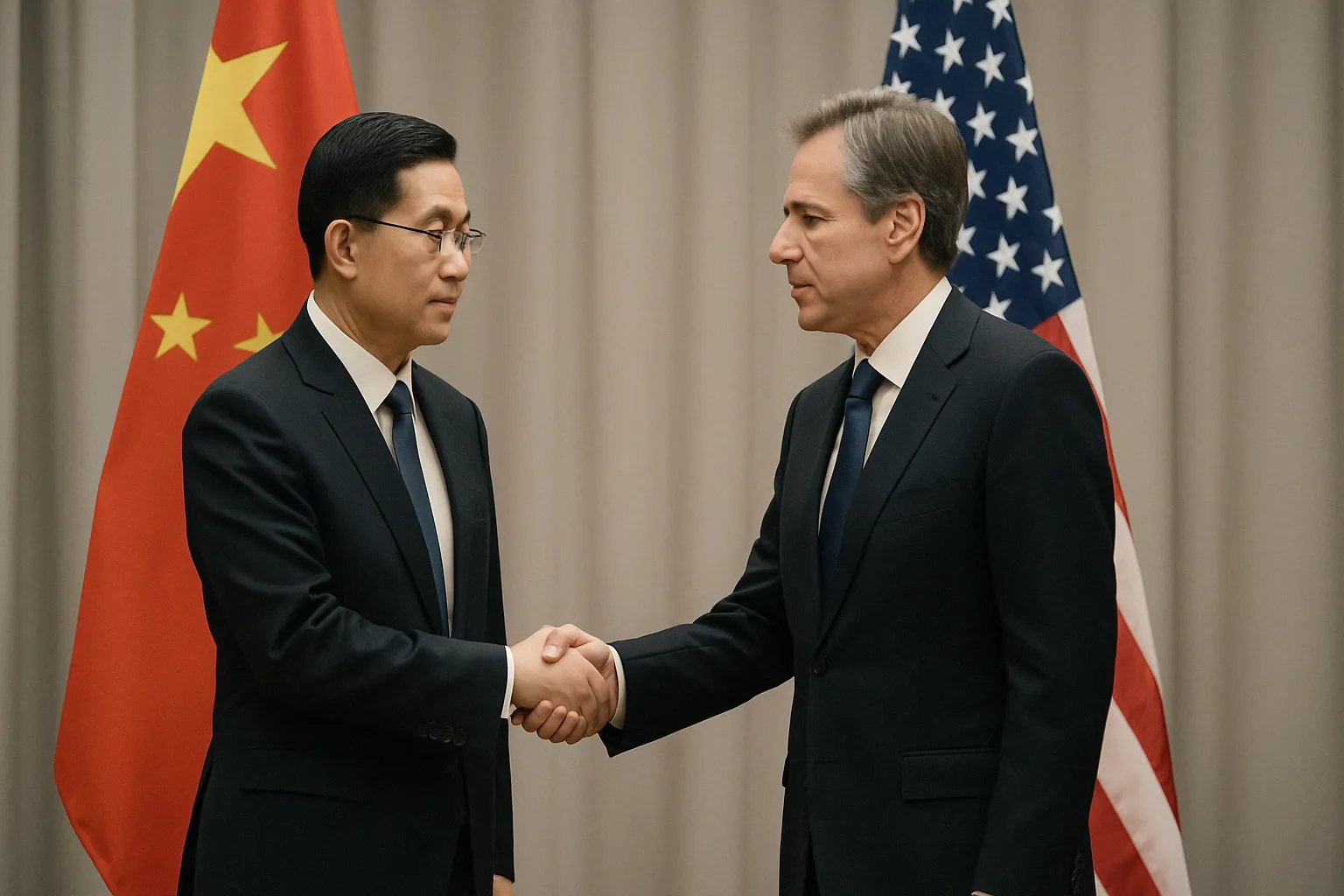
China’s top diplomat in Washington urges the US and China to end their trade war, arguing that a peaceful relationship will boost the global economy and benefit both nations.
US-China Trade War: Time to Call a Truce?
Trade tensions have been like storm clouds hanging over the world’s two largest economies for years. But, in a candid statement on Monday, China’s ambassador to the US, Xie Feng, didn’t mince words. He called for the immediate end of the bruising US-China trade war, firmly insisting, “The Earth is big enough to accommodate both nations.” That’s quite an image, isn’t it? Two giants—sometimes friends, sometimes rivals—jostling for space, but he says there’s no need for elbows.
Now, you have to wonder: why is Beijing’s man in Washington choosing this moment to ramp up the peace talks? Well, let’s get into that.
Global Economy: A World Waiting for Relief
The global economy’s been caught in the crossfire for a good while. Since 2018, tariffs and tit-for-tat measures have sent shivers through markets. Supply chains? They’ve felt the squeeze. Prices at the grocery store—well, you already know how weird that’s gotten since all this started.
Ambassador Xie pointed out that no one wins in a trade war, not really. “The world needs both China and America,” he told a crowd of diplomats and business leaders, all keenly aware of how bumpy the ride has been. He added, “Mutual respect, peaceful coexistence, and win-win cooperation should not be mere slogans.”
Tariffs: Who’s Really Paying the Price?
It’s tempting to think tariffs are just IOUs passed between nations. But here’s the catch—those costs often land on the average shopper or manufacturer. More than $550 billion in tariffs have appeared during this dispute, according to reports from both governments and independent analysts.
Think of it this way: when a tariff hits a product, US and Chinese businesses eat some of the cost, sure—but most often, it snowballs down to you and me. From higher prices at big box stores to delayed delivery of vital tech parts, the ripple effects travel far.
Even during holiday shopping seasons, families noticed prices that just seemed out of whack. It turns out global trade isn’t some distant boardroom drama—it’s right there in our carts and cupboards.
“Earth Is Big Enough”: More Than a Catchphrase
“You know what?” Ambassador Xie’s turn of phrase—“the Earth is big enough for both countries”—struck a chord. At first blush, it might sound idealistic, but it’s got a practical side. He argued that the US and China should look at each other as partners, not adversaries.
Here’s the thing: many industries desperately need the stability cooperation brings. Chipmaking, renewable energy, even agriculture—all require open channels and trust. The “Earth is big enough” idea is about sharing space and, more importantly, sharing responsibility.
The ambassador’s sentiment carries weight for ordinary people, too. When the global powerhouses get along, the world’s less anxious.
Common Concerns: Jobs, Manufacturing, and the Road Ahead
Many people in America and China have worried about jobs—either lost to overseas factories or threatened by shifting supply chains. Ambassador Xie tackled this head-on. He suggested that instead of a lose-lose contest, the two countries could shape a win-win game.
- Technology: Shared research and development boost innovation everywhere.
- Climate change: Working together, the US and China can fight global warming more effectively.
- Agriculture: When tariffs fall, farmers on both sides have more chances to sell crops.
Let me explain: Rough patches are part of international business, but permanent barriers? Those help no one. Yes, some are worried about losing leverage or competitive advantage. But history shows that open markets and fair play generally lead to more prosperity in the long run.
Why the Sudden Push Now?
That’s a fair question, and honestly, it’s not just about pure economics. The call to thaw relations comes on the eve of key global talks—think G20 meetings and climate summits. Trade ties are tangled up with big issues like security, tech access, and whether the globe can keep up with our appetite for gadgets without burning out the planet.
China’s ambassador emphasised that stepping back from confrontation isn’t surrender—it’s just a smarter strategy, like calling a timeout in a rough game. “We should replace walls with bridges,” he said. It’s catchy—the kind of soundbite that grabs headlines—but it’s also pretty clear-eyed when you picture the mountains of paperwork and endless Zoom calls it’d take to actually rebuild trust.
Obstacles and Optimism: Is Peaceful Coexistence Really Possible?
Let’s not kid ourselves. Political realities run deep. Both countries have elections to think about, with leaders often talking tough on trade, especially when times are tight at home.
There are thorny issues: intellectual property differences, market access, and national security. But some experts argue that every major economy faces the same hurdles—and what matters is how you talk about them.
“Diplomacy is messy, but it’s not impossible,” said a US trade analyst at the event. He compared the US-China relationship to a long-standing neighbourhood rivalry: sometimes noisy, sometimes friendly, always complicated.
Where to Next for US-China Relations?
Well, that’s the million-dollar question—or, perhaps more accurately, the trillion-dollar one. What happens if the two giants actually try to get along? Would competition vanish? Hardly. But imagine a world where business deals come easier, shelves restock faster, and families see a little relief at checkout counters.
The Ambassador hinted at that future, though he was also frank about the obstacles. It won’t flip overnight. It’ll happen, if at all, because leaders—and their people—choose stable, peaceful coexistence over endless shouting matches. That takes hope, probably a fair bit of patience, and a willingness to listen, even when you disagree.
And maybe, just maybe, those storm clouds could finally start to clear.
For the Curious: How Are Everyday Folks Affected?
When nations feud at the highest levels, you might think it’s all boardrooms and press conferences. But honestly, the effects trickle down. Retirees worry about their pensions with stocks swinging up and down. Small businesses scramble to find affordable parts. Farmers—on both sides of the Pacific—watch prices bob with each policy tweak.
One small business owner from Ohio said, “We just want some predictability. It’s like the rules change every season.” That’s a feeling echoed in Chinese factories, too.
Bridges, Not Walls: The Vision Forward
Ambassador Xie’s final appeal wasn’t only to leaders but to people everywhere who want a sense of stability. If “the Earth is big enough,” as he put it, then there’s also enough hope, enough shared interest, to steer away from ongoing friction.
Will cooler heads prevail? The next few months will be crucial. Official talks, economic meetings, and those all-important informal chats behind closed doors may signal whether the two superpowers really can move from confrontation toward cooperation.
Until then, the world watches—maybe a little nervously, maybe with a touch of optimism—knowing how much hinges on what comes next.
For more updates on the evolving US-China relationship, read our full coverage here.

Can you be more specific about the content of your article? After reading it, I still have some doubts. Hope you can help me. https://accounts.binance.com/fr-AF/register?ref=JHQQKNKN
Your point of view caught my eye and was very interesting. Thanks. I have a question for you. https://accounts.binance.com/fr/register?ref=T7KCZASX
Your article helped me a lot, is there any more related content? Thanks! https://www.binance.info/cs/register?ref=OMM3XK51
Can you be more specific about the content of your article? After reading it, I still have some doubts. Hope you can help me.
Hello my family member! I wish to say that this article is amazing, nice written and include almost all important infos. I’d like to peer more posts like this .